Key takeaways
- Confirm approval, brakes, and compatibility before the first trip.
- Never reverse with the tow bar attached.
- Make the pre-trip checklist a habit.
1. Assuming your vehicle can be flat towed
Approval depends on the exact vehicle. Confirm it in the owner's manual before buying equipment. See which vehicles can be flat towed.
2. Skipping supplemental braking
Even a lighter towed car adds load that your motorhome brakes were not sized for. See braking systems.
3. Ignoring state and provincial rules
Rules vary. Check the laws on your route. See braking laws.
4. Backing up with the tow bar attached
Reversing can bind and bend the tow bar and damage the vehicle. Unhook first.
5. Letting safety cables drag
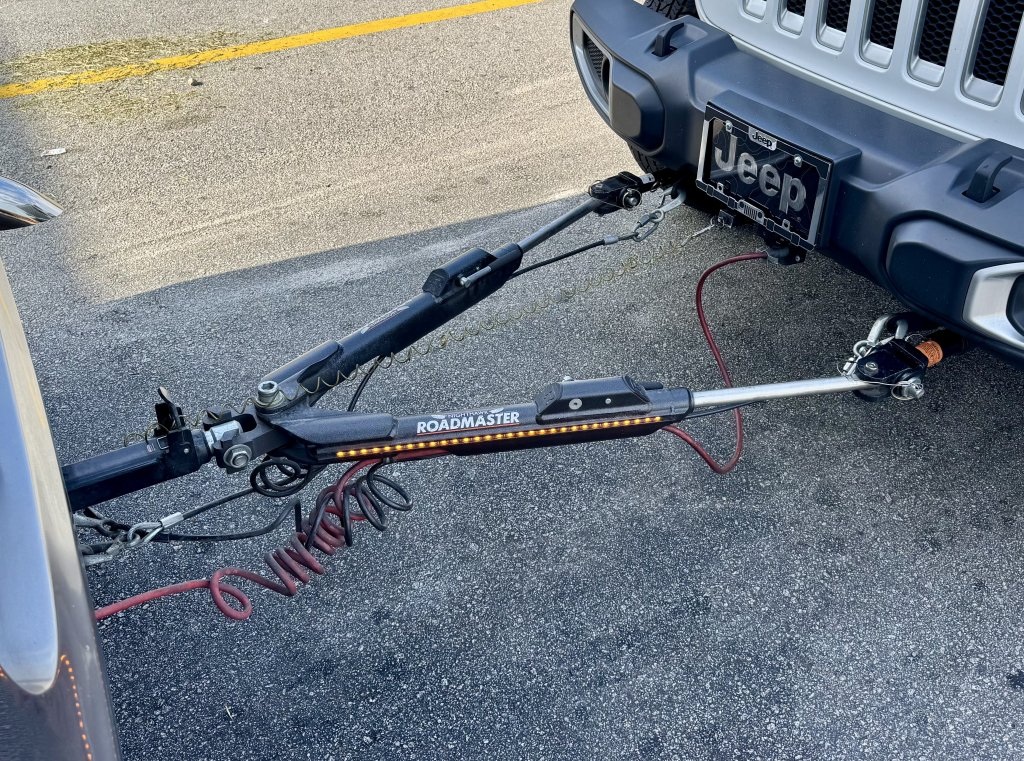
Dragging cables wear out and can catch. Cross them beneath the tow bar and keep them off the ground.
6. Mixing incompatible parts
Tow bar and base plate connections are designed as pairs. Confirm compatibility. See base plates.
7. Forgetting vehicle prep steps
Missing a transmission, transfer case, ignition, or fuse step from the manual can damage the vehicle or drain the battery.
8. Not testing lights and brakes
Test every trip, with a helper if possible.
9. Exceeding weight limits
The lowest rating sets the limit. See weight and GCWR.
10. Skipping the walk-around
A two-minute walk-around catches loose pins and cables. Use the pre-trip checklist.
Frequently asked questions
What is the most serious mistake?
Towing a vehicle that is not approved for flat towing, or towing without proper braking.
What should I do if I notice a problem mid-trip?
Pull over at the first safe place and inspect the connection, cables, and vehicle before continuing.
Where can I get help choosing equipment?
Call TowBarOutlet at (910) 793-2894 with your vehicle details.
This page is general information. Always follow your vehicle owner's manual, equipment instructions, and the laws of the states and provinces you travel through.