Key takeaways
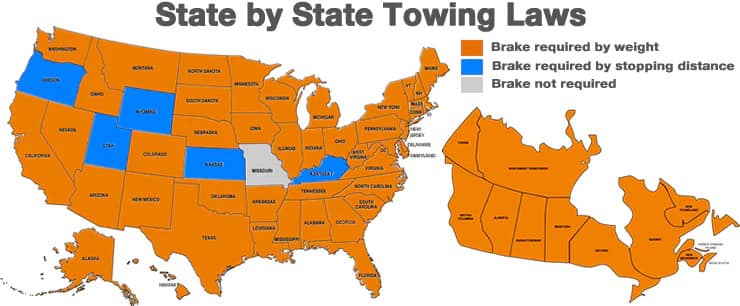
- No national standard exists.
- Thresholds are usually based on towed weight.
- Verify with official state or provincial sources before you travel.
Why the rules vary
Most states regulate brakes on towed units through road use laws written for trailers, usually by weight. Because a flat-towed vehicle is often treated like a trailer, those weight thresholds can apply. Thresholds differ widely, and some jurisdictions are stricter than others. Canadian provinces may also set their own limits.
What road use laws often cover
- Whether supplemental brakes are required, and above what towed weight.
- Whether breakaway protection is required.
- Safety chain or cable requirements.
- Lighting requirements for the towed unit.
- Speed limits that may differ for towing.
- Maximum combination length and number of units.
Which weight counts?
If your towed vehicle has a gross vehicle weight rating (GVWR), that number is often used for legal thresholds. Otherwise, use curb weight plus anything you carry in the vehicle. When in doubt, use the higher number.
How to check your route
- List every state and province you will drive through.
- Look up the towing and braking rules on each official state transportation or highway patrol website.
- Note the strictest requirement on your route and set up to meet it.
- Keep a printed or saved copy of the rules and your vehicle weight information.
Third-party charts can be helpful but can be out of date, so verify with the official source.
A practical approach
Even where a law does not clearly require it, a supplemental braking system is a smart upgrade. It improves stopping, reduces strain on the motorhome, and avoids questions about whether your towed vehicle counts as a trailer. Learn more on our braking systems page.
Frequently asked questions
Does my state require supplemental brakes on a flat-towed car?
Check your state's official transportation or patrol website. Many jurisdictions apply trailer brake rules by weight.
Is a towed car considered a trailer?
Often it is treated like one for brake rules, but wording differs. Verify with the official source.
Where is the most reliable source?
State and provincial government websites. Charts from manufacturers are helpful but should be double-checked.
This page is general information. Always follow your vehicle owner's manual, equipment instructions, and the laws of the states and provinces you travel through.