Key takeaways
- Check the connection, cables, lights, brakes, and vehicle settings every trip.
- Test brakes and lights before leaving.
- Recheck at the first stop.
Connection
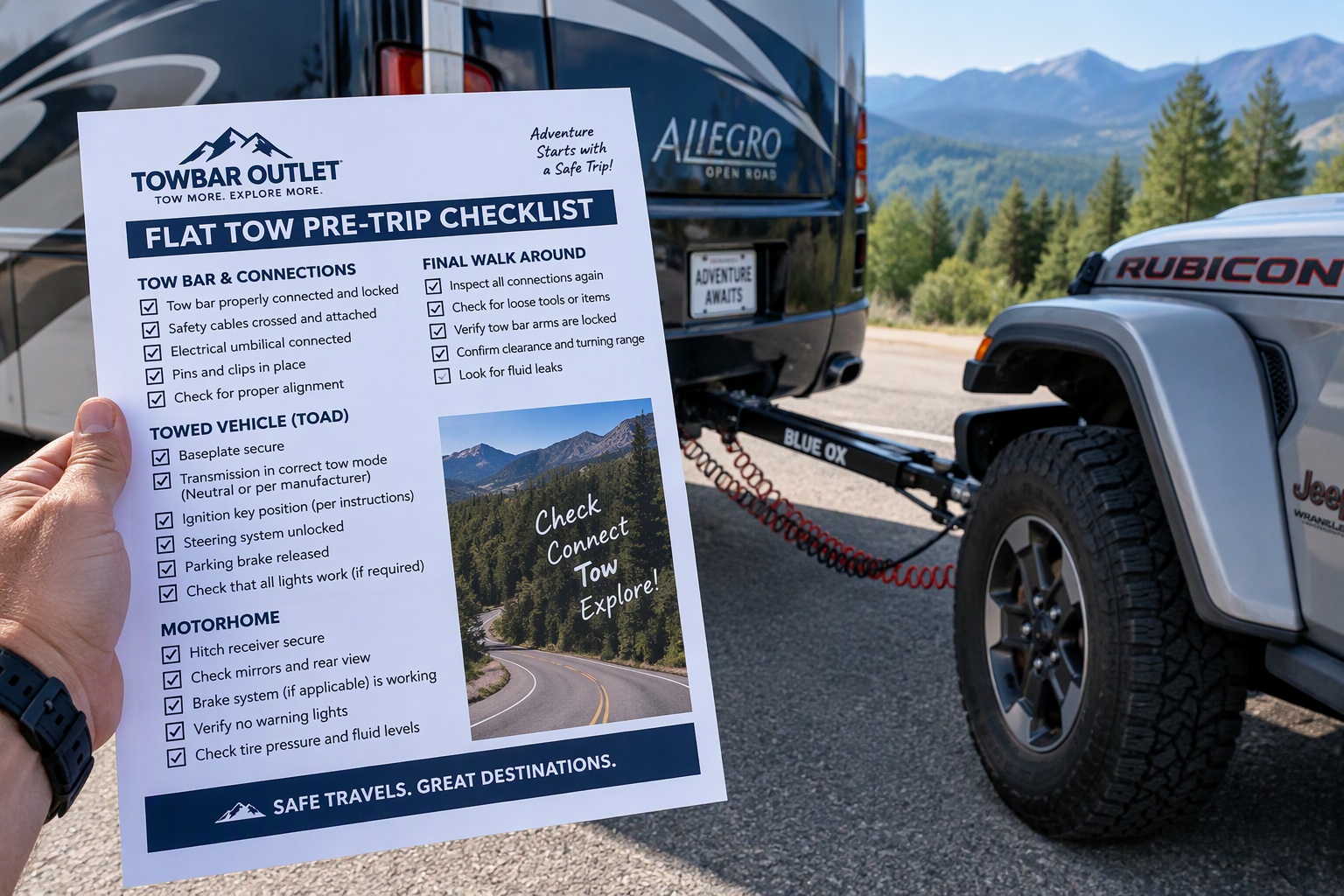
- Tow bar fully seated in the receiver, locking pin installed
- Tow bar arms attached to base plate, pins and clips secured
- No excessive play or looseness when pulled
- Tow bar roughly level
Safety cables and breakaway
- Safety cables crossed, secure, and clear of the ground
- Cables show no fraying or rust
- Breakaway cable connected and routed correctly
Lighting and electrical
- Running lights, brake lights, and both turn signals working
- Charge line or fuse bypass set per the vehicle manual
- Connectors clean and fully seated
Supplemental braking
- System installed, armed, and powered
- Test engagement with a helper
- Monitor or indicator working, if equipped
Towed vehicle preparation
- Transmission and transfer case set per the owner's manual
- Ignition and steering position per the manual
- Parking brake released
- Doors, windows, and hood closed and locked
- Cargo secured, weight within limits
Tires and weight
- Towed vehicle tire pressure correct
- Motorhome tire pressure correct
- Combined weight within motorhome ratings
Final check
Make a gentle first turn and confirm the towed vehicle tracks properly. Recheck connections at the first safe stop. See the full process in our hookup guide.
Frequently asked questions
How often should I run the checklist?
Before every departure, even when you are just moving to another campsite.
What if the towed vehicle seems to pull to one side?
Stop safely and check tire pressure, tow bar alignment, and that the vehicle's settings match the manual.
Can I download this checklist?
Print this page, or contact us for a printable PDF version.
This page is general information. Always follow your vehicle owner's manual, equipment instructions, and the laws of the states and provinces you travel through.